Showing posts with label Break the Rules. Show all posts

Tuesday, May 3, 2016

How to Nurture Your Child to Be Creative #3 Don't Impose Unnecessary Rules


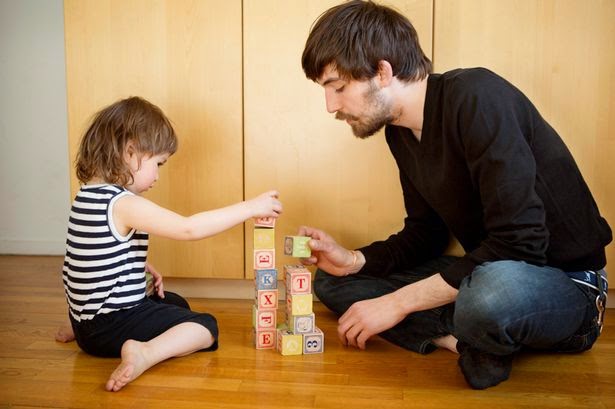
We all need some rules of course. Rules help to keep children safe and teach them how to behave in a considerate and thoughtful way. Many parents, however, instinctively impose rules on children which aren’t strictly necessary, and when it comes to fostering creativity, it is vital to carefully consider rules before you impose them.

For example, a classic rule which stifles children’s creativity is that they must colour in between the lines. It is a good rule if you’re trying to teach fine motor skills and encourage your child to follow instructions carefully, but when it comes to encouraging them to express themselves and ‘think outside the box,’ it quite literally reins in their natural creativity. Sometimes the rules we set can inadvertently impose our judgments on whether a creative effort is ‘good’ or not. At other times, we impose unnecessary limits which restrict a child from really letting go and experimenting freely with the new materials and inventive techniques. Rules are good (“Don’t play on the road”) but don’t impose unnecessary rules (“The sky must be coloured in blue”).

Lord, Give Us Today Our Daily Idea(s)


Sunday, April 24, 2016

Renaissance Innovators who Challenge Orthodoxies (Nonconformists Wins)


Perhaps the first thing that comes to mind when we think about Renaissance innovators is their contrarian spirit. It was a time when people began to ask sceptical questions that had never been asked before, and to challenge deeply entrenched beliefs that had long been taken for granted. For examples:

Copernicus, Galileo, and Kepler asked:
“What if the Earth is not the centre of the Universe? What if it revolves around the Sun along with the other planets?”

Martin Luther asked:
“What if the papacy and the dogma of the Roman Catholic church are actually wrong? And what if we could read the Bible and listen to sermons in our own language, instead of in Latin?”

Petrarch asked:
“What if a person can achieve great things in this world without being ungodly? What if God wants us to use the intellectual and creative powers he gave us to their fullest potential?”

Andreas Vesalius asked:
“What if the dominant theories of human anatomy that have been unassailable for a thousand years are fully misguided? What if the human body functions completely differently than we have been taught? And what if we started dissecting some dead bodies to find out the truth?”

Paracelsus asked:
“What if everything we know about medicine is nonsense? What if certain chemicals and minerals, used in the right dosage, would be a far better way to cure illnesses than traditional practices? What if nature could teach us more about medicine than ancient books from Greece and Rome?”

Machiavelli asked:
“What if politics has nothing to do with theology or morality? What if it’s simply about using all means – fair and foul – to retain power?”

Descartes asked:
“What if all of our traditional systems of thinking, most of which are founded upon Aristotle’s ideas, are false? What if we set out to build a new philosophical system from the group up, by first doubting everything we think we know?”

Isaac Newton asked:
“What if conventional concepts of physics, gravity, and motion are inconsistent with reality? What if we need new laws and mathematical models for understanding mechanics?”

Filippo Brunelleschi and Leon Battista Alberti asked:
“Why can’t a painting be less like wall decoration and more like a window into the nature world? What if we used mathematical and optional principles to imitate objects so accurately that they look entirely real?”

Christopher Columbus asked:
“What if we could get to the East Indies much faster by sailing west instead of east and circumnavigating the globe?”

Amerigo Vespucci asked:
“What if the Earth has a much larger circumference that we learned from Ptolemy’s cartography? What if these lands Columbus has newly discovered are not the Indies at all, but in fact another whole continent – a New World?”

Almost by definition, the Renaissance revolutionaries were nonconformists who were willing to contest previously held truths – beliefs and assumptions that had been accepted as absolute truth for perhaps a thousand years or more – and to reinvent their worldview completely from scratch. Many of them were branded as heretics or lunatics. Yet their propensity to break the chains of precedent and to challenge conventional thinking became the basis for a whole string of breakthrough discoveries and new philosophies that literally changed our world.
[Questions are taken from The 4 Lenses of Innovation (2015) by Rowan Gibson. Title mine]

Lord, Give Us Today Our Daily Idea(s)

Tuesday, September 8, 2015

Creative Mind: The Characteristics of the Creative Person


Creative thinkers combine ideas and information in ways that form new solutions, ideas, processes, or products. “The hallmark of creative people is their mental flexibility,” says creativity expert Roger von Oech. “Like race car drivers who shift in and out of different gears depending on where they are on the course, creative people are able to shift in and out of different types of thinking depending on the needs of the situation at hand.” Look at table below to see some primary characteristics of creative people. Underneath all these qualities lie a desire to learn, a drive to question, and a commitment to keep an open mind.  

CHARACTERISTIC
EXAMPLE
Willingness to take risks
Taking a difficult, high-level course
Tendency to break away from limitations
Entering a marathon race
Tendency to seek new challenges & experiences
Taking on an internship in a high-pressure workplace
Broad range of interests
Investing new moves on basketball court and playing guitar at an open-mike night
Ability to make new things out of available materials
Making curtains out of bedsheets
Tendency to question norms & assumptions
Adopting a child of different ethnic background than the family’s
Willingness to deviate from popular opinion
Working for a small, relatively unknown political party
Curiosity and inquisitiveness
Wanting to know how a computer program works
Source: Adapted from T. Z. Tardif and R. J. Sternberg, “What Do We Know About Creativity?” in The Nature of Creativity, ed. R.J. Sternberg (London: Cambridge University Press, 1988).

Try some or all of the following strategies to boost your creative abilities.

Be curious. The more information and ideas you gather as you think, the more perspective you have to build a creative idea or solution. Collect information and ideas from reading materials, people, the Internet, anywhere – and record them on smartphone or in writing. Branch out and cultivate new interests. Seek out new experiences and take in the ideas and perspectives that you encounter.

Shift your perspective. At first, a problem may look like: “The house isn’t quiet when I study.” If you take a wider look, you may discover hidden causes or effects of the problem, such as “I haven’t chosen the best time of day to study” or “I haven’t let my housemates know that I need quiet.” Question your assumptions; ask people you trust for their perspectives; read in order to discover new ways of looking at situation.

Don’t get hooked on finding the one right answer. There can be lots of “right answers” to any question. The more possibilities you generate, the better your chance of finding the best one. Also, don’t stop the process when you think you have the best answer – keep going until you are out of stream. You never know what may come up in those last gasps of creative energy.

Break the rules sometimes. All kinds of creative breakthroughs have occurred because someone questioned a rule or an assumption. Women and members of minorities can vote and hold jobs because someone questioned a rule – a law – many years ago. Even the rules of logic don’t always hold – following strict logic may cause you to miss analogies or ignore your hunches. At one time in the not-so-distant past, for example, it made no logical sense that two people could talk to one another while in different cities – and now the telephone is a fact of life (Just thinking, how logical it was for you to read my blog from you smartphone or laptop from the invisible World Wide Web in the year 1800).

Ask “what if” questions. Set up hypothetical environments in which new ideas can grow. “What if I knew I couldn’t fail?” “What if I had unlimited money or time or energy?” See what idea, however outrageous, comes from a “what if” question – and then think about how to make it happen. Don’t necessarily make it happen, but – think. Just by asking the question “what if” you can boost your creative ability.

Take risks and, when necessary, embrace failure. Even though failure is always a possibility, taking risks is the only way to make your highest goals reachable. If you insist on playing it safe, you may miss out on the path – often paved with failures – leading to the best possible solution or situation.

Lord, Give Us Today Our Daily Idea(s)

References and Suggested Readings:
1. Roger von Oech, A Kick in the Seat of the Pants (1986)
2. Roger von Oech, A Whack on the Side of the Head (1998)

3. J.R. Hayes, Cognitive Psychology: Thinking and Creating (1978)

Tuesday, January 6, 2015

Nurture Creativity: Purpose Stimulate Breakthrough Idea


“A noble purpose inspires sacrifice, stimulates innovation and encourages perseverance”
(Gary Hamel)

I’m fascinated by the life of Thomas Edison. Anybody who can give the world the electric light, the microphone, the storage battery, the phonograph and a thousand other inventions, is worth studying. Historians say he was driven by one word: PURPOSE. Not pleasure, not popularity, not even personal gain, but – PURPOSE. Purpose stimulates breakthrough idea.

Here are some of the recorded principles by which he lived:
1)    Work to obtain all the knowledge you can about what you want to achieve,
2)    Fix your mind on your purpose. Persist! Seek! Use all knowledge you can accumulate or learn from others,
3)    Keep on searching no matter how many times you meet with disappointment,
4)    Refuse to be influenced by the fact that someone else tried the same thing and failed,
5)    Keep yourself sold on the idea that a solution to the problem exists somewhere, and that you’ll find it.

Then he added: “The trouble with most people is, they quit before they ever start.” Anyone can come out with idea, brilliant idea, but without purpose the motivation even to start will not make idea into a reality. Quitting is idea-destructor. Purpose, “fix your mind on your purpose” is a great idea-stimulator. Because of the vision and purpose that God puts in Nehemiah’s heart, he can rebuild the city wall. Nehemiah (of the Bible) didn’t conquer through brilliance (remember, most creative people in the history are school dropouts), he conquered through persistence, perseverance – and yes, prayer. He never quit. He have a purpose. In spite of the criticism, in spite of the pressure, he refuse to give up – that’s why he rebuilt Jerusalem. Purpose stimulate breakthrough idea.

What inspires you? What could you do to make this world a better place? Could you improve your local community in some way that contributes to the greater wellbeing and safety of its residents? Could you invent something or come out with ideas that will improve people lives and create awareness in your campus, church or community? Can you come up with a creative breakthrough that will challenge your potential and develop your personal skills? Will you use your God given mind and knowledge to come up with a way to raise funds for your favourite charities and causes?

What is your purpose?
Purpose stimulate breakthrough idea
Lord, Give Us Today Our Daily Idea(s)

Saturday, October 11, 2014

Barriers to Creativity #9: "To Err is Wrong"


Creativity, like common sense, is supposed to be common. Creativity is natural and spontaneous. Yet it is not exhibited as frequently as it should. Experts believe that there are several reasons for this. These reasons are called ‘Barriers to Creativity’. ‘Barriers’ are the thing that stop us from thinking creatively and the reason that make us not as creative as we should be.

Barrier #9: “To Err is Wrong”
From a practical standpoint, ‘to err is wrong’ makes sense. (Err means ‘be mistaken’ or ‘incorrect’; ‘make a mistake’). Nevertheless too attached to that belief may undermine our ability to generate new ideas. If we are more concerned with producing the right answers rather than original ideas, then we’ll by-pas the imaginative phrase of creative process. We need to test assumptions and challenge the rules. The creative thinker realizes the potential value of errors. They are stepping-stones to new ideas.
The history of discoveries is filled with people who used erroneous assumptions and failed ideas as stepping-stones to new ideas. A large part of creative thinking is not to be afraid to err. We learn from our mistakes.
           
To err is right, sometimes.
Lord, Give Us Today Our Daily Idea(s)
*These 10 barriers to creativity are taken from creativity expert Roger Von Oech’s A Whack on the Side of the Head: How You Can Be More Creative book. Summaries mine. 

Friday, October 10, 2014

Barriers to Creativity #8: "Don't be Foolish"

This picture of Richard Branson play as AirAsia waitress really make me laugh!
Creativity, like common sense, is supposed to be common. Creativity is natural and spontaneous. Yet it is not exhibited as frequently as it should. Experts believe that there are several reasons for this. These reasons are called ‘Barriers to Creativity’. ‘Barriers’ are the thing that stop us from thinking creatively and the reason that make us not as creative as we should be.

Barrier #8: “Don’t Be Foolish”
Don’t be afraid to appear foolish. Granted that all of us are subject to group pressures but in creative situations we cannot simply follow the majority, for the majority is not always right. Furthermore new ideas are not formed in conforming environments. When in a group, people tend to get the approval of others rather than trying to come up with creative solutions or ideas. When everyone think alike, no one is doing much thinking. All we need to do is to agree.
To be creative we need to take a ‘poke’ at rules, regulations and conventions that keep us thinking the same old stuff. It will get us out of the rut and put our thinking to finding better solutions and ideas. If Christopher Columbus really believed that the world is flat, he would not have dared to attempt to sailing around the earth.
Occasionally play the fool and see what crazy ideas you may come up with. The crazy ideas, my friend, may prove to be winners!
           
Play the fool sometimes.

Lord, Give Us Today Our Daily Idea(s)

Barriers of Creativity #7: "Avoid Ambiguity"

Artistic ambiguous illusion design
Creativity, like common sense, is supposed to be common. Creativity is natural and spontaneous. Yet it is not exhibited as frequently as it should. Experts believe that there are several reasons for this. These reasons are called ‘Barriers to Creativity’. ‘Barriers’ are the thing that stop us from thinking creatively and the reason that make us not as creative as we should be.

Barrier #7: “Avoid Ambiguity”
Most of us do not like ambiguous (unclear or lack of clarity) situations. They are confusing and can cause communication problems. As a result we learn to avoid ambiguity (Personally, I am like that). This is a good rule to get your message clearly across. There are instances however, when ambiguity can be a powerful stimulus to imagination.
When in the creative process, a little ambiguity can provoke us into asking questions that will lead us to new ideas. We have to learn to look at things ambiguously. We ask questions such as “What does this mean?” and “How else can this be interpreted?” For example, the question, what is half of 8? The answer is of course 4. But if we assume the question is ambiguous, we will look for other answers such as 3 (if you slice vertically) or 0 (if you slice horizontally) depending on how we define “half.”
To be more creative we have to look for ambiguity in the world around us. I see a brick as a hammer and a ballpoint pen as a hole puncher when I need these things and there are none around.

Think ambiguously.

Lord, Give Us Today Our Daily Idea(s)

Thursday, October 9, 2014

Barriers to Creativity #5: "Play is Frivolous"


Creativity, like common sense, is supposed to be common. Creativity is natural and spontaneous. Yet it is not exhibited as frequently as it should. Experts believe that there are several reasons for this. These reasons are called ‘Barriers to Creativity’. ‘Barriers’ are the thing that stop us from thinking creatively and the reason that make us not as creative as we should be.

Barrier #5: “Play is Frivolous”
            A playful attitude is fundamental to creative thinking. We generate most of our ideas when we are playing in our mental playground. That is because our defenses are down, our mental locks are opened and there is little concern with rules and regulations. Play also free us from worry which is the root cause of our mental block. Unlike reality, during play – when we win we win, and when we lose we learn. (The only cost is time). Children know play is a good way to learn. Children love to play at cooking and driving. Just watch a kid playing in the school bus or at the computer. They try everything!
            We germinate ideas during play. We toy with an idea before we come up with the real product or process. Some of the most important inventions were originally conceived during play. How to nurture your creativity? Play. Play. Play.
   
Play is fine.

Lord, Give Us Today Our Daily Idea(s)

Wednesday, October 8, 2014

Barriers of Creativity #3: "Follow the Rules"


Creativity, like common sense, is supposed to be common. Creativity is natural and spontaneous. Yet it is not exhibited as frequently as it should. Experts believe that there are several reasons for this. These reasons are called ‘Barriers to Creativity’. ‘Barriers’ are the thing that stop us from thinking creatively and the reason that make us not as creative as we should be.

Barrier #3: “Follow the Rules”
            There is a lot of pressure in our culture to follow the rules. ‘Do not try to be different’; ‘Do what everybody else does’; ‘Uniformity and compliance to rules make society work’; ‘Let’s do things the way they have always been done’; ‘It makes sense’; ‘Do not rock the boat’ etc.
            For creative thinking there is no virtue in doing things the way they have always been done. Creativity means doing things in new and better ways. If we keep doing things the same way we will never improve. Following the rules is a mental block, for we will always think of things as they are not as it can be. Tradition kills creativity. Challenging the rules (there is a limit however. As a Christian, I will not intentionally challenge God's Commandments) is a good creative thinking strategy. Ask these questions: Is this the only way? Is this the best way? Are there better ways?

Challenge the rules.

Lord, Give Us Today Our Daily Idea(s)

Sunday, March 2, 2014

Creative-Idea Strategy: Think Like a Fool


Roger von Oech is the writer of my favourite book on creativity A Whack on the Side of the Head (25th Anniversary already). One of his favourite creative thinking strategies is: THINK LIKE A FOOL. He explained:


"Carrying the strategy of "looking at things differently" to extremes brings us to the realm of the fool, the being for whom everyday ways of understanding have little meaning. It's the fool's job to extol the trivial, trifle with the exalted, and parody the common perception of a situation. In doing so, the fool makes us conscious of the habits we take for granted and rarely question. A good fool needs to be part actor and part poet, part philosopher and part psychologist. And throughout history, the fool has been consulted by Egyptian pharaohs and Babylonian kings, Chinese emperors, Greeks tyrants, and Hopi Indian chiefs.

The fool will reverse our standard assumptions. He'll say, “If a man is sitting on a horse facing the rear, why do we assume that it is the man who is backwards, and not the horse?”

The fool notices things that other people overlook. He might ask, “Why do people who pour cream into their coffee do so after the coffee is already in the cup, rather than pouring the cream in first and saving themselves the trouble of stirring?”

The fool can also be irreverent. He'll pose riddles such as, “What does a rich man put in his pocket that the poor man throws away?” When he answers, “Snot,” he forces us to re-examine the sanctity of our everyday rituals.

The fool can be cryptic. He'll say the best way to see something is with your ears. Initially, this may seem weird, but after you've thought about it, you might agree that listening to a story conjures up more images than watching television.

The fool can be absurd. Having lost his donkey, a fool got down on his knees and began thanking God. A passer-by saw him and asked, “Your donkey is missing; why are you thanking God?” The fool replied, “I'm thanking Him for seeing to it that I wasn't riding him at the time. Otherwise, I would be missing as well.”

The fool will take the contrary position in most conversations. Whereas many people would agree that, “If a thing is worth doing, it's worth doing well,” The fool might say, “You don't have to do things well! Indeed, it's okay to do them poorly; otherwise you'll never let yourself be a beginner at a new activity.”

The great benefit of the fool's antics and observations is that they stimulate our thinking. They jolt us in the same way that a splash of cold water awakens us when we are drowsy. Question: Where has “thinking like a fool” helped you look at a problem in a helpful way?”

Good insights and concluding question Roger von Oech… to be more creative and generate more good ideas – think like a Fool!
Lord, Give Us Today Our Daily Idea(s)

Wednesday, February 19, 2014

How-To Generate Ideas #8: Break the Rules

Alexander the Great cutting through the legend 'Gordian knot'
“Rules are a great way to get ideas.
All that you have to do is break them” (Jack Foster)

Ideas are unlimited. We are the ones who limited ourselves to have more ideas. The greatest obstacle to creativity and to generate ideas, I think, is the rules that we give to ourselves and even from others. Hey, challenge the rule and break them! Just because things have always been done in a certain way does not mean that there are no other ways of doing or seeing them.

Do you know? In about 333 BC, at the city of Gordium, Turkey, there was a legend about whoever can untie the “Gordium Knot” would become the king of Asia. Alexander the Great was one of the many people who attempted to untie the knot. At first he could not find the end of the knot to unbind it, so he stepped back and said, “What does it matter how I loose it?” So he raised his sword and slashed the knot into half, producing the required ends by breaking the rules and making the prophecy come true. He literally became the king of Asia!

Creative thinkers get their great ideas when they challenge and break the obvious. Mary Lou Cook famously said: “Creativity is inventing, experimenting, growing, taking risks, breaking rules, making mistakes, and having fun.” Break the rules!

Lord, Give Us Today Our Daily Idea(s)

Top 10 Most Read Idea(s) Last 7 Days

Idea-Labels

Thinking Creative Question Action Change Your Life Essential Thinker Series Focus Positive Secrets of the Millionaire Mind Harv Eker Success Attitude Choice Learning Nurture Creativity Play Mindset Perspective Time Experience Habit Observation Curious Different Failure Hardworking How-to Generate Ideas Imagination Problem-Solving Wealth 12 Rules for Life Children Inspiration Jordan Peterson Relax Rich Break the Rules Change Perseverance Reading Risk-Taker Seeing Albert Einstein Barriers to Creativity Confidence I Wonder Series People The Subtle Art of Not Giving A F*ck (Mark Hanson) Connection Happiness Money Possibilities The 7 Habits of Highly Effective People Thought With Winning In Mind Asking Books Character Characteristics of Creative Person Is Technology Changing Our Brains Knowledge Practical Process Writing Believe Challenge Childlike Criticism How to Choose Optimism How to Nurture Your Child to Be Creative Innovative Listening Purpose Relationship Responsibility Story of Idea Thomas Edison Value 7 Climate Facts You Need to Know Communicate Control Enjoy Freedom Fun Idea-Quote Meaning Mistakes Open Mind Opportunity Optimistic Original Resourceful Roger von Oech Talent As A Man Thinketh Combination Commitment Discovery Don't Give Up Dream Energetic Environment Friendship Genius Give Up Growth Leonardo da Vinci Picture Playground Quiet Space Random Reason Start With Why (Simon Sinek) Steve Jobs Understand Walk Wisdom Yew Kam Keong Ability Ambiguity Behavior Crazy Daydreaming Decision-Making Example Facts about Creativity Faith Fear Feeling Goal Hearing Humour Improvement Independence Intuition Isaac Newton Lead Love Motivated Nature Non-Conformist Passion Potential Respect Savor Life Self-Image Stephen R. Covey The Power of Habit Word Alternative Application Awareness Common Blocks to Creativity Conversation Discipline Dynamic Emotion Encouragement Expectation Feedback Flexibility Idealistic Jack Foster Leader Logic Mindful Music Negative Performance Persistence Physical Reinforcement Result Right Answer Sixth Sense Society Talking The Human Body Tony Buzan Vincent Ryan Ruggiero Vision Adventurous Appreciate Attention Be Yourself Beautiful Christopher Columbus Conscious Daring Desire Edward de Bono Empathy Excuses Exercise Financial Galileo Goodness Hardship Help Henry Ford How to Be Innovative Humble IQ Jesus Kindness Laugh Let's Get Started! Memory Mental Rehearsal Michael J. Gelb Multitasking Nicolaus Copernicus Patient Pen and Paper Planning Power Praise Prejudice Proactive Progressive Quality Reality Recording Rejection Routine Sharing Simplicity Sleep Social Media Stand Firm Starbuck Stimulate Strength Stress Studying The Internet Theology Think like A Fool Touching Unpopular Usefulness Victor Hugo What If Win-Win Zig Ziglar 6 Common Creative Killers 9 Types of Intelligence A. Samad Said Affirmation Alexander the Great Aristotle Association Assumption Austin Kleon Balance Benedict de Spinoza Benjamin Franklin Bette Nesmith Graham Bill Gates Blessing Brainstorming Business Carpe Diem Chaos and Order Cicero Colonel Sanders Compliance Concentration Contribute Copernicus David Hume Descartes Desiderius Erasmus Development Diversity Don't Try Download Drug Elaboration Eleanor Roosevelt Enthusiasm Error Ethics Eurika Experiment Explore Extrovert Fluency Francis Bacon Free Book Generalist Giving Back Heroes Hopeful Hormones How to Spark Your Creative Mind How-to Maximizing a New Idea Howard Schultz Hunting Illustration Information Integrity Intention Interruption Introvert Investment James Webb Young Jason Mraz Jean-Jacques Rouseau Jim Carrey Jogging John Locke Jurgen Wolff Juxtapositions Legacy Leon Ann Mean Leon Trotsky Light Liquid Paper Machiavelli Management Manifestation Manipulation Marcus Aurelius Mark Zurkerberg Martin Luther Marty Neumeier Maturity Mental Mihaly Csikszentmihalyi Mind Maping Miracles Mission Statement Modeling Money Blueprint Mood Move On My Top 17 Book on Innovative and Creativity Lists Navigation Skills Niccolo Machiavelli Offline Ontology Ordinary Pablo Picasso Pain Paracelsus Paradigm Paradox of Creative People Parenting Passive Income Peace Perception Philosophy Plato Political Practice Priority Privacy Procrastination Productivity Promote Pythagoras of Samos Rational Rebellious Receiving Reformer Rene Descartes Resilience Resource Myopia Rest Reverse Robert Korn Running Safe Saving Say No Scientific Method Scott Belsky Self-Gratification Selling Seneca Skeptic Slow Down Smelling Social Skills Socrates of Athens Soichiro Honda Specialist Spider-Man St Anselm St Augustine of Hippo St Thomas Aquinas Steal like An Artist Stubborn Suffering Synergize Tasting Technology Thales of Miletus The Creative Environment The Empiricist The Mozart Effect Thomas More Tok Nan Toy Tradition Truth Uniformity Unique Universe Unorthodox Volunteer Walt Disney Wildlife Wonder Xenophanes of Colophon