Showing posts with label Playground. Show all posts

Monday, October 15, 2018

12 Rules for Life #11 Don't Bother Children When They Are Skateboarding (Summary)


This is a chapter-by-chapter summary of a book by Jordan B. Peterson’s 12 Rules for Life: An Antidote to Chaos (2018) series. One chapter, one article. Read this summary, buy the book. Enjoy!

If you think tough men are dangerous, wait until you see what weak men are capable of
(Jordan Peterson)

This rule is essentially about masculinity (you might not agree with me). Peterson tells us that when children do all kinds of this crazy stuff on skateboards and handrails (or in Malaysia, play in the rain or at the playground or outside the house yard), we should let them be. Of course, it might be dangerous but it’s important for them to develop masculinity, competence, take risk and face danger. Normally, a lot of rebellious behavior in school is called “toxic masculinity” but Peterson believes that the benefits are bigger than the probably problematic situations.

When people are untrammeled and feel encouraged, they prefer to live in the edge. By living this way, they can be confident in their experience and confront chaos that helps them develop and grow. They’re made for that reason, to enjoy risk (some of them more than others). Besides, if they are overprotected, they will fail when something dangerous or unexpected will suddenly occur, which inevitably will happen sometime – eventually. So why not let them develop toughness? 

Let them Play... Dangerously

Monday, May 2, 2016

How to Nurture Your Child to Be Creative #1 Let Them Lead the Play


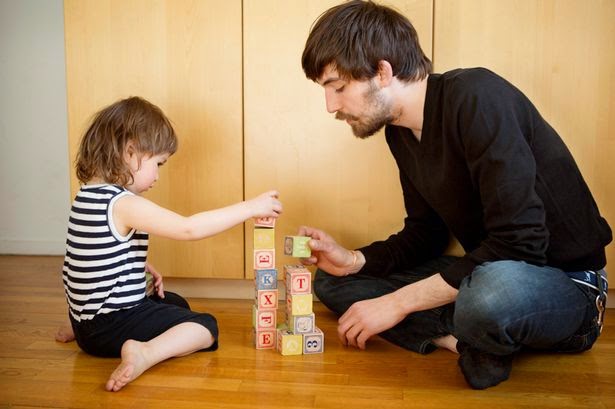
Latest research suggests that although it’s good for us to provide interesting objects and materials for children to play with, and to be on hand to help and play with your child, your child will be happier and more creative if you allow time for unstructured play – in other words, you sometimes need to take a step back and let your child decide what they want to do.

Your child will need access to resources to encourage play and so it is a good idea to set out several different toys and materials (paper plates, paints, glitter, Lego, etc.) which they can use as and when they wish during their playtime. Because they have initiated the play, they will be more actively engaged in whatever activity they are doing and as a result, they will learn more from it.

Allowing your child to lead their own play is not the easy option. Painting and crafts can certainly be messy and after all your careful preparation you may find you child is more interested in playing with teddy bears. This can be very frustrating, however, remember that your child is going to be more creative if they are making more choices about how they use the resources they’re provided with.


Lord, Give Us Today Our Daily Idea(s)

Thursday, October 9, 2014

Barriers to Creativity #5: "Play is Frivolous"


Creativity, like common sense, is supposed to be common. Creativity is natural and spontaneous. Yet it is not exhibited as frequently as it should. Experts believe that there are several reasons for this. These reasons are called ‘Barriers to Creativity’. ‘Barriers’ are the thing that stop us from thinking creatively and the reason that make us not as creative as we should be.

Barrier #5: “Play is Frivolous”
            A playful attitude is fundamental to creative thinking. We generate most of our ideas when we are playing in our mental playground. That is because our defenses are down, our mental locks are opened and there is little concern with rules and regulations. Play also free us from worry which is the root cause of our mental block. Unlike reality, during play – when we win we win, and when we lose we learn. (The only cost is time). Children know play is a good way to learn. Children love to play at cooking and driving. Just watch a kid playing in the school bus or at the computer. They try everything!
            We germinate ideas during play. We toy with an idea before we come up with the real product or process. Some of the most important inventions were originally conceived during play. How to nurture your creativity? Play. Play. Play.
   
Play is fine.

Lord, Give Us Today Our Daily Idea(s)

Saturday, February 22, 2014

How-To Generate Ideas #12: Be More Like a Child

A stick + Something round + add more friends = Fun!
The greatest invention in the world is the mind of a child” (Thomas Edison)

Curiosity is not the quality reserved for the gifted few. Virtually every child is boundlessly curious. But overtime many of us lost our childlike curiosity as we grow up. We stop searching for challenges and exploring new ideas. Thus, Jean Piaget the psychologist suggests: “If you would be more creative stay in part a child, with the creativity and invention that characterizes children before they are deformed by adult society.”

It is the child in you who is creative, not the adult. The adult in you drives to Arena Sukan sport centre and pay for the futsal court. The child in you goes barefoot and plays in the street for free. The adult lifts heavy weights in the gym. The child climbs the trees and play in the playground. The adult thinks too much and too meticulous because he have too many knowledge and set by too many boundaries, rules, assumptions and preconceptions. The child however is innocent and free and does not know what he cannot or should not do and sees the world as it actually is – not as it appears according to what we know previously or taught to believe.

Jack Foster in his book How to Get Ideas said that adult tend to do what they or other people did the last time. He continues: “To children there is no last time. Every time is the first time. And so when they go exploring for ideas they explore a land that is fresh and original, a land without rules, a land without borders or fences or walls or boundaries, a land infinite with promise and opportunity.

To generate more ideas we need to be like child again. Let the child in you come out. Play with matches. Play the piano with your chin. Ask crazy and most honest questions. Draw pictures and colour the tree blue and the grass orange and the cloud pink. Run barefoot at Taman Rimba Recreation Park. Eat ice cream and sit by the sidewalk. Sing or whistle in the elevator. Throw rocks. Create toys. Have fun. Be like a child – and you’ll be surprise by how many new and fresh ideas you gets!

Lord, Give Us Today Our Daily Idea(s)

Friday, February 21, 2014

How-To Generate Ideas #11: Be in a Conductive Environment


We have very few inferior people in the world.
We have lots of inferior environments.
Try to enrich your environment” (Frank Lloyd Wright)

I wondered why I and my friends were more active, expressive and creative in the school football field or in the canteen or even behind the school corridors or during co-curricular activities than in the classroom. I know now. It’s the environment and the atmosphere that makes the difference (also partly because there was no teacher to control us).

Too serious and nonconductive environment can hinder creativity. Having fun during work or class however allows us to be more relaxed – and thus open our mind to get inspired with great ideas. A stressful or depressing environment doesn’t give us the mood to think of new ideas or doing thing differently.

Can we transfer the more relaxed atmosphere outdoors into the workplace or classroom? If can, then do it. If can’t, why not? In our office we have whiteboard to communicate, television to watch the latest news, DVD player for entertainment and video studies, boiler to make coffee, sofa to rest and take a nap, a set of carrom and playing card to play, a room to pray, a mini library for inspiration and reference, three floor stairs enough for exercise, fairly nice scenery outside office (or just look at the sky).

This kind of environment is healthy and natural. I don’t feel like I’m in the office, it feels like I’m in the playground. Good conductive environment and atmosphere gives birth to good ideas. “Try to enrich your environment.”

Lord, Give Us Today Our Daily Idea(s)

Top 10 Most Read Idea(s) Last 7 Days

Idea-Labels

Thinking Creative Question Action Change Your Life Essential Thinker Series Focus Positive Secrets of the Millionaire Mind Harv Eker Success Attitude Choice Learning Nurture Creativity Play Mindset Perspective Time Experience Habit Observation Curious Different Failure Hardworking How-to Generate Ideas Imagination Problem-Solving Wealth 12 Rules for Life Children Inspiration Jordan Peterson Relax Rich Break the Rules Change Perseverance Reading Risk-Taker Seeing Albert Einstein Barriers to Creativity Confidence I Wonder Series People The Subtle Art of Not Giving A F*ck (Mark Hanson) Connection Happiness Money Possibilities The 7 Habits of Highly Effective People Thought With Winning In Mind Asking Books Character Characteristics of Creative Person Is Technology Changing Our Brains Knowledge Practical Process Writing Believe Challenge Childlike Criticism How to Choose Optimism How to Nurture Your Child to Be Creative Innovative Listening Purpose Relationship Responsibility Story of Idea Thomas Edison Value 7 Climate Facts You Need to Know Communicate Control Enjoy Freedom Fun Idea-Quote Meaning Mistakes Open Mind Opportunity Optimistic Original Resourceful Roger von Oech Talent As A Man Thinketh Combination Commitment Discovery Don't Give Up Dream Energetic Environment Friendship Genius Give Up Growth Leonardo da Vinci Picture Playground Quiet Space Random Reason Start With Why (Simon Sinek) Steve Jobs Understand Walk Wisdom Yew Kam Keong Ability Ambiguity Behavior Crazy Daydreaming Decision-Making Example Facts about Creativity Faith Fear Feeling Goal Hearing Humour Improvement Independence Intuition Isaac Newton Lead Love Motivated Nature Non-Conformist Passion Potential Respect Savor Life Self-Image Stephen R. Covey The Power of Habit Word Alternative Application Awareness Common Blocks to Creativity Conversation Discipline Dynamic Emotion Encouragement Expectation Feedback Flexibility Idealistic Jack Foster Leader Logic Mindful Music Negative Performance Persistence Physical Reinforcement Result Right Answer Sixth Sense Society Talking The Human Body Tony Buzan Vincent Ryan Ruggiero Vision Adventurous Appreciate Attention Be Yourself Beautiful Christopher Columbus Conscious Daring Desire Edward de Bono Empathy Excuses Exercise Financial Galileo Goodness Hardship Help Henry Ford How to Be Innovative Humble IQ Jesus Kindness Laugh Let's Get Started! Memory Mental Rehearsal Michael J. Gelb Multitasking Nicolaus Copernicus Patient Pen and Paper Planning Power Praise Prejudice Proactive Progressive Quality Reality Recording Rejection Routine Sharing Simplicity Sleep Social Media Stand Firm Starbuck Stimulate Strength Stress Studying The Internet Theology Think like A Fool Touching Unpopular Usefulness Victor Hugo What If Win-Win Zig Ziglar 6 Common Creative Killers 9 Types of Intelligence A. Samad Said Affirmation Alexander the Great Aristotle Association Assumption Austin Kleon Balance Benedict de Spinoza Benjamin Franklin Bette Nesmith Graham Bill Gates Blessing Brainstorming Business Carpe Diem Chaos and Order Cicero Colonel Sanders Compliance Concentration Contribute Copernicus David Hume Descartes Desiderius Erasmus Development Diversity Don't Try Download Drug Elaboration Eleanor Roosevelt Enthusiasm Error Ethics Eurika Experiment Explore Extrovert Fluency Francis Bacon Free Book Generalist Giving Back Heroes Hopeful Hormones How to Spark Your Creative Mind How-to Maximizing a New Idea Howard Schultz Hunting Illustration Information Integrity Intention Interruption Introvert Investment James Webb Young Jason Mraz Jean-Jacques Rouseau Jim Carrey Jogging John Locke Jurgen Wolff Juxtapositions Legacy Leon Ann Mean Leon Trotsky Light Liquid Paper Machiavelli Management Manifestation Manipulation Marcus Aurelius Mark Zurkerberg Martin Luther Marty Neumeier Maturity Mental Mihaly Csikszentmihalyi Mind Maping Miracles Mission Statement Modeling Money Blueprint Mood Move On My Top 17 Book on Innovative and Creativity Lists Navigation Skills Niccolo Machiavelli Offline Ontology Ordinary Pablo Picasso Pain Paracelsus Paradigm Paradox of Creative People Parenting Passive Income Peace Perception Philosophy Plato Political Practice Priority Privacy Procrastination Productivity Promote Pythagoras of Samos Rational Rebellious Receiving Reformer Rene Descartes Resilience Resource Myopia Rest Reverse Robert Korn Running Safe Saving Say No Scientific Method Scott Belsky Self-Gratification Selling Seneca Skeptic Slow Down Smelling Social Skills Socrates of Athens Soichiro Honda Specialist Spider-Man St Anselm St Augustine of Hippo St Thomas Aquinas Steal like An Artist Stubborn Suffering Synergize Tasting Technology Thales of Miletus The Creative Environment The Empiricist The Mozart Effect Thomas More Tok Nan Toy Tradition Truth Uniformity Unique Universe Unorthodox Volunteer Walt Disney Wildlife Wonder Xenophanes of Colophon