Showing posts with label Failure. Show all posts

Wednesday, December 5, 2018

Secrets of the Millionaire Mind: Wealth File #4 Rich People Think Big, Poor People Think Small (Summary)


This is a chapter-by-chapter summary of a book by T. Harv Eker’s Secret of the Millionaire Mind: Mastering the Inner Game of Wealth (2005) series. One chapter, one article. Read this summary, buy the book. Enjoy!

Wealth File #4:
Rich People Think Big.
Poor* People Think Small.

“The Law of Income: You will be paid in direct proportion to the value you deliver according to the marketplace,” said Harv Eker, “The key word is value. It’s important to know that four factors determine your value in the marketplace: supply, demand, quality, and quantity.” This makes sense. The more you offer, the more you get paid. This is a fair law. You offer a higher value and get paid more than someone who offers a lower value. Who do you think should be paid more, a good lawyer or a bad lawyer? A good footballer or a bad footballer? A good actor or a poor actor? The answers are obvious…

I’m not going to explain the concept of supply and demand here, as it’s not what the book is about. The major struggle people have with offering more value is the quantity. The quantity factor simply means how much of your value do you actually deliver to the marketplace? Most people play small because #1 They are scared of failure, and #2 They feel small and unworthy. “But hear this,” Eker emphasized, “Your life is not just about you. It’s also about contributing to others. It’s about living true to your mission and reason for being here on this earth at this time. It’s about adding your piece of the puzzle to the world. Most people have stuck in their egos that everything revolves around me, me, and more me. But if you want to be rich in the truest sense of the word, it can’t be about you. It has to include adding value to other people’s lives.”

Let’s assume that what you have to offer actually has a high value to other people and helps them. Now, should you offer that value to one person or to ten? Or to a hundred? A thousand? Thousands? Yes! Yes, Yes, Yes! You definitely should offer that value to as many people as possible. Don’t hold it back. It is your DUTY to offer it to as many people as possible. This is what THINK BIG is all about. Many, many people need what you have to offer – offer it to them and get paid proportionally. “The by-product is that the more people you help, the ‘richer’ you become, mentally, emotionally, spiritually and definitely financially.”

It’s time to stop hiding out and start stepping out. Most people think small. And guess what, they will achieve relatively little. On the other hand, if you THINK BIG, you can achieve much more! You can help thousands and thousands of people. That shall be the goal. Eker concluded: “In the end, small thinking and small actions lead to being both broke and unfulfilled. Big thinking and big actions lead to having both money and meaning. The choice is yours!”

[*I need to note that the Harv Eker makes it clear in this book that he does not mean to degrade poor people. He does not think that rich people are better than poor or middle-class people. They’re just richer.]


I Have A Millionaire Mind!

Tuesday, April 3, 2018

With Winning In Mind: Catch Yourself Doing Something Right (Chapter 5)


This is a chapter-by-chapter summary of a book by Lanny Bassham's With Winning in Mind (2012) series. One chapter, one article. Read this summary, buy the book. Enjoy!

“Stop catching yourself doing things wrong and trying to find out why you are failing. Instead, only think about your successes, never your failures. An example is a golfer. The mentally uninformed golfer hits a good shot and says, ‘Well, I guess I just got lucky that time.’ When he hits a bad shot he says, ‘Why do I always do that?’ The mentally informed golfer hits a bad shot. He knows it is bad, but says, ‘Next time I will hit a better shot.’ Then he hits a good shot and says, ‘That’s a good shot. What did I do right?’ See the difference?”
(Lanny Bassham)

Instead of catching ourselves doing something wrong, let’s from now on catch ourselves doing right and improve our chances of repeating that positive behavior in the future. You can catch yourself doing anything right. Be it cleaning your room, studying, reading, meditating, being kind to someone, having fun, practicing something… whatever it is: Catch yourself and pat yourself on the back. Applaud yourself. Better yet, celebrate yourself.

“I know it’s counterintuitive,” writes Bassham, “but that’s because our society is seriously messed up. We’re all programmed to focus on the negative, to complain, to make excuses, to behave like little bitches, and to use negative reinforcement. Let’s stop that.” Instead, be nice to yourself and others, focus on the positive, talk about the good things in life, and positively reinforce them.

Have A Winning Mindset!


Wednesday, February 14, 2018

The Subtle Art of Not Giving A F*ck: Failure Is the Way Forward (Chapter 7 Summary)


This is a chapter-by-chapter summary of a book by Mark Manson’s The Subtle Art of Not Giving A F*ck: A Counterintuitive Approach to Living a Good Life (2016) series. One chapter, one article. Read this summary, buy the book. Enjoy!

“You can become your own source of inspiration. You can become your own source of motivation. Action is always within reach. And with simply doing something as your only metric for success – well, then even failure pushes you forward”
(Mark Manson)

Manson considers himself extremely fortunate that he graduated college in 2007, right before the job market tanked. After all, if he had never hit rock bottom, he would never have had the courage to start his own online business. Many would have considered freshly graduated Manson to be a failure, but Manson had his own metric of success: for him, giving up on his dreams and accepting a ‘safe’ job would have meant failing. Struggling for a few years with no money was not failing.

Just as there is no happiness without problems, there are no improvements without thousands of tiny failures. After all, children fall thousands of times when learning to walk, but they get back up and try again. Avoiding failure is a learned behaviour, and it is one that we must break ourselves of in order to move forward and improve. Again, this depends on setting good values for ourselves (see previous article) – actions that we take every day to improve our lives.

Embracing failure will often mean suffering pain and discomfort and fear. Manson gives this advice for dealing with fear of failure; when you are stuck on a problem, don’t just sit there. Do something. The answers will follow. Action is not just the effect of motivation, but also the cause of motivation.

Accept that failure and pain are inherent components
of an active life.

Tuesday, January 9, 2018

How to Be Innovative #2 Don't Think About Failure, Think About What Have You Learned


“Innovation is the ability to see change as an opportunity – not a threat”
Steve Jobs, 2010

Many of us are brought up believing that failure is a bad thing. Our early childhood experiences typically involve being laughed-at for getting things wrong. Although we have to learn the difference between right and wrong and what is ‘good’ and ‘bad’, we are often not taught how to learn from our mistakes.

The famous inventor Thomas Edison story tells of how he invented the light bulb. He tried more than 2,000 experiments before he got the electric bulb to work (although, I suspects that it was not exactly 2,000 experiments. It just mean lots of failed experiments). A reporter asked him how it felt to fail so many times, Edison responded, “I never failed once. I invented the light bulb. It just happened to be a 2,000 step process.” At every stage, he learnt what worked and what did not. If he had given up at stage one, the world would be a darker place today!

The problem we have today is that we have a low tolerance for failure, especially in evangelism and business environment. Failure or the perception of failure is often treated with dismissal, although the reality is that although the expected results may not have been achieved, those involved learned a valuable lesson. A 1976 study carried out by the Swiss Federal Institute of Technology in Zurich, on the reasons for major engineering failures, found insufficient knowledge to be their primary cause. The more information we have, the less likely we are to fail, so engineers today are more likely to get things right by learning from what didn’t work in the past.

This is true for all aspects of our lives, whether it is work, at home or during leisure. We need to learn from our mistakes rather than trying to forget them and move on. In every situation, it can be worthwhile jotting down or take a mental note on what has worked and what hasn’t. Commits it to memory because it can provide a useful reference when you face a similar situation or a new challenge. Don’t think about failure, instead think about unexpected outcome!

Practical Suggestions:

§  If something hasn’t worked, don’t focus on the failure, instead think about what did work and learn from it
§  Think about what hasn’t worked for you in the past and reflect on how you dealt with the situation and what you leaned. What this a positive or negative or growing experience? Did you come out of the situation a better person?

Lord, Give Us Today Our Daily Idea(s)


Sunday, April 17, 2016

Change Your Life: No Success without Risk and Failure


“If you want to increase your success rate,
double your failure rate”
(Thomas Watson)

When we hear about extremely successful people, we mostly hear about their great accomplishments – not about the many mistakes they made and the failures they experienced along the way. In fact, most successful people throughout history are also those who have had the most failures. That is no coincidence. People who achieve great feats, no matter in what field, understand that failure is not a stumbling block but a stepping-stone on the road to success. These is no success without risk and failure. We often fail to see this truth because the outcome is more visible than the process – we see the final success and not the many failures that led to it.

When I acknowledge that fulfilling my God-given potential must involve some failure, I no longer run away from risks and challenges. The choice is a simple one: Learn to fail, or fail to learn.

Thomas Edison had 1,093 patents registered to his name – more than any other person in history! And while he most certainly deserves a place of honour in the science hall of fame, he also deserves honorary membership in the “failure hall of fame” for the tens of thousands of experiments he conducted that failed. Edison himself, however, did not see these experiments as failures. When he was working on one of his inventions, a storage battery, someone pointed out to him that he had failed ten thousand times. “I have not failed,” responded Edison, “I’ve just found ten thousand ways that won’t work.” Recognizing the real path to his accomplishments, Edison remarked, “I failed my way to success.”

Don’t avoid making mistakes by not trying,
Learn from failure.
Lord, Give Us Today Our Daily Idea(s)

Tuesday, September 8, 2015

Creative Mind: The Characteristics of the Creative Person


Creative thinkers combine ideas and information in ways that form new solutions, ideas, processes, or products. “The hallmark of creative people is their mental flexibility,” says creativity expert Roger von Oech. “Like race car drivers who shift in and out of different gears depending on where they are on the course, creative people are able to shift in and out of different types of thinking depending on the needs of the situation at hand.” Look at table below to see some primary characteristics of creative people. Underneath all these qualities lie a desire to learn, a drive to question, and a commitment to keep an open mind.  

CHARACTERISTIC
EXAMPLE
Willingness to take risks
Taking a difficult, high-level course
Tendency to break away from limitations
Entering a marathon race
Tendency to seek new challenges & experiences
Taking on an internship in a high-pressure workplace
Broad range of interests
Investing new moves on basketball court and playing guitar at an open-mike night
Ability to make new things out of available materials
Making curtains out of bedsheets
Tendency to question norms & assumptions
Adopting a child of different ethnic background than the family’s
Willingness to deviate from popular opinion
Working for a small, relatively unknown political party
Curiosity and inquisitiveness
Wanting to know how a computer program works
Source: Adapted from T. Z. Tardif and R. J. Sternberg, “What Do We Know About Creativity?” in The Nature of Creativity, ed. R.J. Sternberg (London: Cambridge University Press, 1988).

Try some or all of the following strategies to boost your creative abilities.

Be curious. The more information and ideas you gather as you think, the more perspective you have to build a creative idea or solution. Collect information and ideas from reading materials, people, the Internet, anywhere – and record them on smartphone or in writing. Branch out and cultivate new interests. Seek out new experiences and take in the ideas and perspectives that you encounter.

Shift your perspective. At first, a problem may look like: “The house isn’t quiet when I study.” If you take a wider look, you may discover hidden causes or effects of the problem, such as “I haven’t chosen the best time of day to study” or “I haven’t let my housemates know that I need quiet.” Question your assumptions; ask people you trust for their perspectives; read in order to discover new ways of looking at situation.

Don’t get hooked on finding the one right answer. There can be lots of “right answers” to any question. The more possibilities you generate, the better your chance of finding the best one. Also, don’t stop the process when you think you have the best answer – keep going until you are out of stream. You never know what may come up in those last gasps of creative energy.

Break the rules sometimes. All kinds of creative breakthroughs have occurred because someone questioned a rule or an assumption. Women and members of minorities can vote and hold jobs because someone questioned a rule – a law – many years ago. Even the rules of logic don’t always hold – following strict logic may cause you to miss analogies or ignore your hunches. At one time in the not-so-distant past, for example, it made no logical sense that two people could talk to one another while in different cities – and now the telephone is a fact of life (Just thinking, how logical it was for you to read my blog from you smartphone or laptop from the invisible World Wide Web in the year 1800).

Ask “what if” questions. Set up hypothetical environments in which new ideas can grow. “What if I knew I couldn’t fail?” “What if I had unlimited money or time or energy?” See what idea, however outrageous, comes from a “what if” question – and then think about how to make it happen. Don’t necessarily make it happen, but – think. Just by asking the question “what if” you can boost your creative ability.

Take risks and, when necessary, embrace failure. Even though failure is always a possibility, taking risks is the only way to make your highest goals reachable. If you insist on playing it safe, you may miss out on the path – often paved with failures – leading to the best possible solution or situation.

Lord, Give Us Today Our Daily Idea(s)

References and Suggested Readings:
1. Roger von Oech, A Kick in the Seat of the Pants (1986)
2. Roger von Oech, A Whack on the Side of the Head (1998)

3. J.R. Hayes, Cognitive Psychology: Thinking and Creating (1978)

Tuesday, February 3, 2015

Starbucks Experience and the Idea of Small Win

For those of you not wanting to add on additional calories, ask the barista to make your drink "skinny".
They will use nonfat milk, no whip, and sugar-free
“Many great ideas start small at the beginning” (Richard Angelus)

When Howard Schultz founded what would become Starbucks, the baristas wore bow ties, nonstop opera music played, and the store had no chairs. “We made a lot of mistakes,” Schultz regularly acknowledges. Schultz and his team learned from them as they did countless other experiments. Drawing upon his observations of Italian coffee houses, Schultz’s grand vision was to create a different kind of coffee experience that he called the “Starbucks experience”: where people experience great coffee in a communal place. As for the specifics, the Starbucks store and experience of today looks almost nothing like Schultz’s original concept.

The Starbucks we know emerged by carefully adapting to customer feedback through a series of small wins. In fact, Schultz described Starbuck’s mentality as: “the value of dogmatism and flexibility.” As long as ideas were in accordance with company principles, Schultz believed they should just say yes to customer requests.

So, for example, Schultz was initially determined to avoid using non-fat milk since he didn’t think it tasted as good as regular milk and because it was at odds with the Italian coffee experience. When customers kept requesting non-fat drinks, Schultz relented. The success of those drinks became an important small win and soon much more: non-fat milk would grow to account for almost half of Starbucks’s lattes and cappuccinos. “In hindsight, the decision looks like a no-brainer,” Schultz wrote in Pour Your Heart Into It, but that direction wasn’t obvious; it was the fast pace of sales that proved the point.
[Reference: Little Bets: How Breakthrough Ideas Emerge from Small Discoveries by Peter Sims (Free Press, 2011), page 146-147]

Small wins, win.

Lord, Give Us Today Our Daily Idea(s)

Monday, January 19, 2015

Nurture Creativity: Have Crazy Idea, Don't Give Up!

Fred Smith, founder of FedEx
“I think there are two keys to being creatively productive.
One is not being daunted by one’s fear of failure, the second is sheer perseverance”
(Mary-Claire King)

“It’s so crazy, it might just work,” said Fred Smith optimistically. He was an undergraduate at Yale University in 1965. As part of the coursework, he wrote an economics paper exploring the process of transportation of goods in the United States. Fred Smith wrote “crazy” idea on paper how a company carrying small, essential items by plane could be a much better business. He, however, did not go into details about how to actually run such a company.

As expected, his professor gave the paper a grade of “C”. Just like Smith’s professor, other people thought that the idea was indeed deserving a “C”. Some even thought that it was “crazy”. It was, but not for Fred Smith. Therefore, Smith held on to the crazy idea despite what others thought of it. He believes in his idea. To cut the story short, in 1971, the company was launched. It is called FedEx Express. Throughout the years, will all the challenges and failures, Smith never give up. “Today,” wrote Abhash Kumar, in YouStory.com, “FedEx is a global giant with operations in more than 220 countries and territories and an annual revenue of US $45 billion.”

What I learned from Fred Smith’s story is this: Logic will dictate that we stay away from crazy ideas. True, but the crazy ones are dared to go beyond what is “logical” and what is “safe”. They were the ones who have ventured out of the boundaries of the norm. Highly creative people are basically crazy. And once they believe in the idea, they will never give up. Remember Steve Jobs’ famously quote: “the ones who are crazy enough to think that they can change the world, are the ones who do.” Are you crazy enough? Do you have “crazy” idea that you believe in despite people’s negative criticisms about it? Do you want to change the world? Then, stay on. Don’t give up.

Many ideas deemed as crazy at first may just turn out to be very creative and innovative. “Nearly all creative ideas can sound crazy when first presented,” write Nolan Bushnell, founder of Atari. He continues, “Most people don’t have creative imaginations, so most people don’t get what the creative is saying. And people tend to be fearful of things they don’t understand.” Here is the fact: Not all crazy ideas have worked out – but most do. Add that crazy idea to perseverance and believe. Remember, some will just laugh at your idea. Don’t give up. If it is a worthy idea, make it work despite how silly it may sounds.

Have crazy idea. Don’t give up.
God, Give Us Today Our Daily Idea(s)

Sunday, January 4, 2015

Nurture Creativity: Take More Time Offline


“Oh, it's sunny outside. I better update my Facebook status
for all of my friends that don't have windows” (Unknown)

Most of life is offline. Eating food and watching movies. Sleeping and bathing. Drinking coffee and reading books. All these daily activities are crucial for developing our creativity. I’m not telling you to stop online but asking you to spend more significant time offline. For me, I don’t check Facebook and email all the time (with exceptions). I try to limit my Facebook and social media time to one hour or less per day, and check e-mail once or twice daily except on Sunday (sometime I simply don’t check for few days!). I know a lot of bosses demands that their employees check email all weekend, but thanks God my boss is cool (so far).

You see, if you take more time offline, you can have more time to do something else. You will have more time to read book or magazine, more space to interact with people personally, you can take a break and pause from the desire to always online, you can observe – nature and people – around you, smell the flower, more time to play and exercise, etc. All these are human way of getting more creative. I think Marilyn Monroe says it well, “Creativity has got to start with humanity and when you're a human being, you feel, you suffer. You're gay, you're sick, you're nervous or whatever.” And – you will fail too, in relationship, business, project, games. Remember, human being makes mistake and failure, and failure is an essential aspect of creativity.

Take more time offline, be human again.
Lord, Give Us Today Our Daily Idea(s)

Monday, December 15, 2014

Common Blocks to Creativity #2: Conformity


“Let us not follow where the path may lead.
Let us go instead where there’s no path and leave a trail” (Japanese Proverb)

My dictionary defines conformity as “compliance with standards, rules, or laws” and “behaviour in accordance with socially accepted conventions.” Negative form of Conformity creeps into us because of the fear of disregarding social norms, the fear of social disapproval. A number of factors raise the desire to conformity. Fear of failure, fear of humiliation and rejection, and allergy to ambiguity (or uncertainly) may make one escape into a safe, don’t-rock-the-boat, conformist niche. Conformity permits a relatively risk-free existence through the acceptance of the status quo. It manifests itself in excessive compliance to customs, traditions, rituals, and procedures. (Also standards, rules and man-made laws).

An excessive desire for conformity is clearly a block to creativity, since creativity implies change in the status quo. Indeed, conformists have often blocked creative individuals. Jesus, my Lord was rejected by the Pharisees for his teachings (and his claiming to be equal with God) and Galileo was made to recant his theories by the Roman Catholic Church. No doubt, some research evidence suggests that conformity to social pressures dampens creativity.

Some conformity is, of course, essential for any social existence. But without creativity, a society would soon face extinction since the world keeps on changing, thereby making the status quo obsolete. Societies that adapt quickly tend to survive and prosper. Those that stick to conventional modes are often superseded by those that do not.

“The roots of conformity may go deep, into child-rearing practices, into what is considered right and wrong behaviour, and the severity with which deviation from socially prescribed behaviour is punished,” write Pradip N. Khandwalla in his book Lifelong Creativity. He added: “Conformity cannot be got rid of easily. Active questioning of conventions and habits, exposure to dynamic cultures, and rewarding of creative forays, however, can break the shackles of conformity. A study of individuals who successfully broke conventions can also fortify one’s resistance to conformity, as also friendship with unconventional types.”

“Creativity often rewards the non-conformist, the iconoclast, the generalist who treats life not a linear fast track to success, but as a forest of rich discoveries that one can meander through, creating one’s own trail” (Ho Kwon Ping). Most of the time, be a non-conformist!

Lord, Give Us Today Our Daily Idea(s)

Common Blocks to Creativity #1: Fear of Failure


“Many of life's failures are people who did not realize
how close they were to success when they gave up.” (Thomas A. Edison)

From our childhood, success is usually rewarded and failure is punished, so some of us develop an exaggerated fear of failure. Such individuals are likely to avoid competitive situations, situations in which they are likely to be compared to others. A strong fear of failure makes us avoid risks. At times, it makes us take excessive risks to have an alibi for failure.

Although some fear of failure is useful in mobilizing us for a task, excessive fear of failure prevents us from acting at our best. The fear of failure mind-set often say to themselves: “It’s never work”; “We don’t have the time”; “It’s not in the budget”; “The Boss will never go for it”; “We’re always done it this way”; “That sounds stupid”; “Let’s see what the committee thinks”; “It’s not our style”; “I’ve seen that before somewhere”; “The last person who suggested that doesn’t work here anymore”; etc. These killer-thought-phrases destroys ideas before they have the chance to prove themselves. Fear of failure avoid risks and thus expelled many new unproven ideas. What a lost!

The acceptance of failure as necessary part of life is the best way to get rid of this block. No child would learn to work if it was excessively afraid of falling. Failure is a necessary as success in learning new skills. Failure simply means that we have to try harder, or that we have to take a new approach. It does not mean we are no good but that we have found new ways not to fail again. “I have not failed,” said Thomas A. Edison, “I've just found 10,000 ways that won't work.” This way failure can be a tremendous source of information and a powerful spur to growth and improvement. Do not fear. If you fail, try again!

Lord, Give Us Today Our Daily Idea(s)

References:
1.      Lifelong Creativity: An Unending Quest by Pradip N. Khandwalla (Tata McGraw-Hill Publishing Company Limited, 2004).

2.      Breakthrough Thinking: Using Creativity to Solve Problems by Nick Souter (ILEX, 2007)

Monday, December 8, 2014

Characteristics of a Creative Person #5: Stay Flexible at All Times


“The creative person is flexible – he is able to change as the situation changes,
to break habits, to face indecision and changes in conditions without undue stress.
He is not threatened by the unexpected as rigid, inflexible people are”
(Frank Goble)

New ideas sometimes need to change direction, shape, size and composition along their developmental path. None of that upsets the creative person. Although it’s more convenient for new ideas to work perfectly the moment they’re conceived, that rarely happens. A creative person will nurse a new idea along and make whatever investment in it that’s required.

Part of remaining flexible is the willingness to abandon an idea if it proves unworthy of further development. Forcing a square peg through a round hole for the sake of pride is not the kind of attitude you’ll find in a truly creative person. Creative people don’t think in terms of failure, but in terms of learning from every experience. To the creative person a failed idea represents knowledge gained.

Creative people stay flexible at all times
Lord, Give Us Today Our Daily Idea(s)

*I recommend you to read Danny Cox and John Hoover’s Seize the Day (Book-mart Press, 1994), “Step Two: Developing Strengths” page 77-118.

Wednesday, March 12, 2014

Creative People are Daring

Reepicheep the Mouse from Chronicles of Narnia is a small and daring creature :) 
For the creative, thinking is an adventure. Because they are relatively free of preconceived notions and prejudiced views, creative people are less inclined to accept prevailing views, less narrow in their perspectives, and less likely to conform with the thinking of those around them. They are bold in their conceptions, willing to entertain unpopular ideas and seemingly unlikely possibilities. Therefore, like Galileo and Columbus, Edison and the Wright brothers, they are more open than others to creative ideas.

Their daring has an additional benefit: It makes them less susceptible to face-saving than others. They are willing to face unpleasant experiences, apply their curiosity, and learn from those experiences. As a result, they are less likely than others to repeat the same failure over and over.

Lord, Give Us Today Our Daily Idea(s)

Taken from Vincent Ryan Ruggiero’s The Art of Thinking: A Guide to Critical and Creative Thought (8th Edition), (United States: Pearson Education, Inc., 2007) pg. 90


Thursday, February 13, 2014

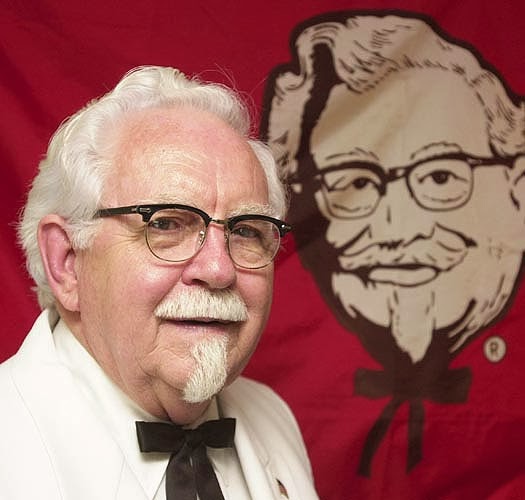
Story of Idea #1: Colonel Sanders' Fried Chicken Idea

“All achievements, all earned riches, have their beginning in an idea”
(Napoleon Hill)

“To accomplish great things we must, not only dream but believe,
not only believe but act.” (Anonymous)

Let me cut the story short: Colonel Harland David Sanders (September 9, 1890 – December 16, 1980), who at the customary age of 65 received his first old age pension social security payment felt so dissatisfied that he decided to do something about it. Taking full responsibility for himself and with an idea in his mind he changed his life with the only asset he had – a family recipe for fried chicken.

At 65 he started to try and find restaurant owners who would pay him a share in their increased profits for their fried chicken sales that used his special recipe. 1,007 times he was told “No!” (Maybe if he were to come to me with this idea, I would probably say no too). The 1,008th said “Yes!” 9 years later he sold his business for USD2,000,000. That was a huge amount of money… the rest is history. Today his influence of idea is greatly known as Kentucky Fried Chicken (KFC).

He said, “I could have just complained about the system, cursed my luck and blamed everyone else, but I would have still been trying to live on that social security income, I had got me in that position. It was up to me to get me out.” If he never got the idea, take the action, persevere in the midst of 1,000 rejections, relentlessly achieving his dream – we will probably never taste his famous fried chicken. I will never his great idea. “One sound idea,” writes Napoleon Hill, “is all you need to achieve success.”

Lord, Give Us Today Our Daily Idea(s)

Top 10 Most Read Idea(s) Last 7 Days

Idea-Labels

Thinking Creative Question Action Change Your Life Essential Thinker Series Focus Positive Secrets of the Millionaire Mind Harv Eker Success Attitude Choice Learning Nurture Creativity Play Mindset Perspective Time Experience Habit Observation Curious Different Failure Hardworking How-to Generate Ideas Imagination Problem-Solving Wealth 12 Rules for Life Children Inspiration Jordan Peterson Relax Rich Break the Rules Change Perseverance Reading Risk-Taker Seeing Albert Einstein Barriers to Creativity Confidence I Wonder Series People The Subtle Art of Not Giving A F*ck (Mark Hanson) Connection Happiness Money Possibilities The 7 Habits of Highly Effective People Thought With Winning In Mind Asking Books Character Characteristics of Creative Person Is Technology Changing Our Brains Knowledge Practical Process Writing Believe Challenge Childlike Criticism How to Choose Optimism How to Nurture Your Child to Be Creative Innovative Listening Purpose Relationship Responsibility Story of Idea Thomas Edison Value 7 Climate Facts You Need to Know Communicate Control Enjoy Freedom Fun Idea-Quote Meaning Mistakes Open Mind Opportunity Optimistic Original Resourceful Roger von Oech Talent As A Man Thinketh Combination Commitment Discovery Don't Give Up Dream Energetic Environment Friendship Genius Give Up Growth Leonardo da Vinci Picture Playground Quiet Space Random Reason Start With Why (Simon Sinek) Steve Jobs Understand Walk Wisdom Yew Kam Keong Ability Ambiguity Behavior Crazy Daydreaming Decision-Making Example Facts about Creativity Faith Fear Feeling Goal Hearing Humour Improvement Independence Intuition Isaac Newton Lead Love Motivated Nature Non-Conformist Passion Potential Respect Savor Life Self-Image Stephen R. Covey The Power of Habit Word Alternative Application Awareness Common Blocks to Creativity Conversation Discipline Dynamic Emotion Encouragement Expectation Feedback Flexibility Idealistic Jack Foster Leader Logic Mindful Music Negative Performance Persistence Physical Reinforcement Result Right Answer Sixth Sense Society Talking The Human Body Tony Buzan Vincent Ryan Ruggiero Vision Adventurous Appreciate Attention Be Yourself Beautiful Christopher Columbus Conscious Daring Desire Edward de Bono Empathy Excuses Exercise Financial Galileo Goodness Hardship Help Henry Ford How to Be Innovative Humble IQ Jesus Kindness Laugh Let's Get Started! Memory Mental Rehearsal Michael J. Gelb Multitasking Nicolaus Copernicus Patient Pen and Paper Planning Power Praise Prejudice Proactive Progressive Quality Reality Recording Rejection Routine Sharing Simplicity Sleep Social Media Stand Firm Starbuck Stimulate Strength Stress Studying The Internet Theology Think like A Fool Touching Unpopular Usefulness Victor Hugo What If Win-Win Zig Ziglar 6 Common Creative Killers 9 Types of Intelligence A. Samad Said Affirmation Alexander the Great Aristotle Association Assumption Austin Kleon Balance Benedict de Spinoza Benjamin Franklin Bette Nesmith Graham Bill Gates Blessing Brainstorming Business Carpe Diem Chaos and Order Cicero Colonel Sanders Compliance Concentration Contribute Copernicus David Hume Descartes Desiderius Erasmus Development Diversity Don't Try Download Drug Elaboration Eleanor Roosevelt Enthusiasm Error Ethics Eurika Experiment Explore Extrovert Fluency Francis Bacon Free Book Generalist Giving Back Heroes Hopeful Hormones How to Spark Your Creative Mind How-to Maximizing a New Idea Howard Schultz Hunting Illustration Information Integrity Intention Interruption Introvert Investment James Webb Young Jason Mraz Jean-Jacques Rouseau Jim Carrey Jogging John Locke Jurgen Wolff Juxtapositions Legacy Leon Ann Mean Leon Trotsky Light Liquid Paper Machiavelli Management Manifestation Manipulation Marcus Aurelius Mark Zurkerberg Martin Luther Marty Neumeier Maturity Mental Mihaly Csikszentmihalyi Mind Maping Miracles Mission Statement Modeling Money Blueprint Mood Move On My Top 17 Book on Innovative and Creativity Lists Navigation Skills Niccolo Machiavelli Offline Ontology Ordinary Pablo Picasso Pain Paracelsus Paradigm Paradox of Creative People Parenting Passive Income Peace Perception Philosophy Plato Political Practice Priority Privacy Procrastination Productivity Promote Pythagoras of Samos Rational Rebellious Receiving Reformer Rene Descartes Resilience Resource Myopia Rest Reverse Robert Korn Running Safe Saving Say No Scientific Method Scott Belsky Self-Gratification Selling Seneca Skeptic Slow Down Smelling Social Skills Socrates of Athens Soichiro Honda Specialist Spider-Man St Anselm St Augustine of Hippo St Thomas Aquinas Steal like An Artist Stubborn Suffering Synergize Tasting Technology Thales of Miletus The Creative Environment The Empiricist The Mozart Effect Thomas More Tok Nan Toy Tradition Truth Uniformity Unique Universe Unorthodox Volunteer Walt Disney Wildlife Wonder Xenophanes of Colophon